
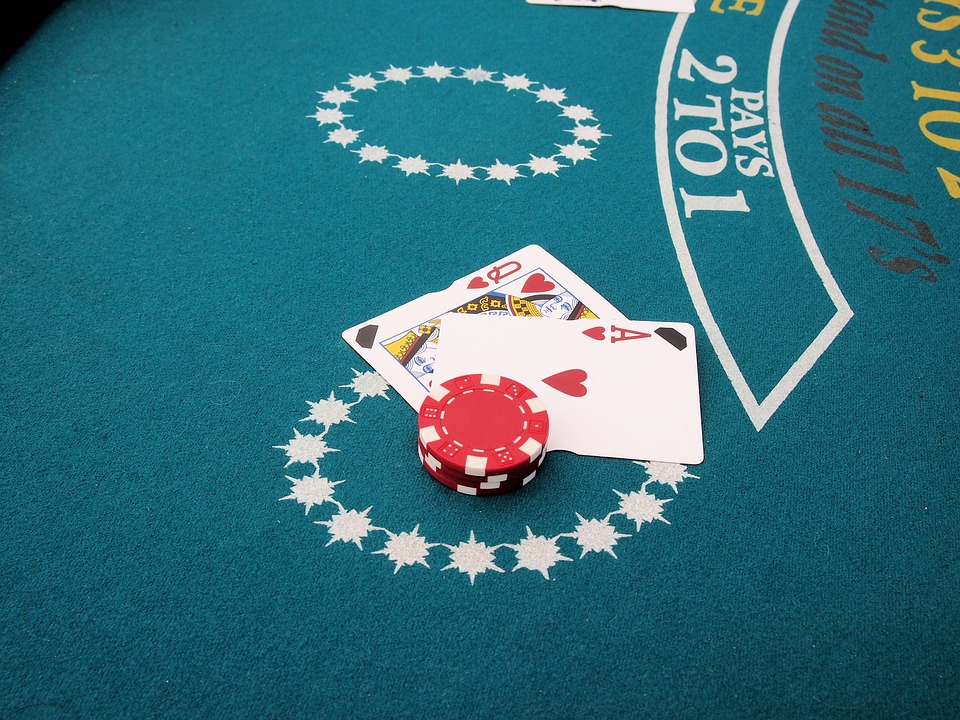
 Blackjack is one of the most popular casino games available at land-based, online and mobile casinos. The aim of the game is to find a card total closer to 21 than the dealer.
Players try to find a hand as close as possible to 21 without going over – going ‘bust’. Another way to win is to make the dealer bust his hand so that he goes over. Read on to find out how to play blackjack and improve your game.
Unlike with most casino games, the way you play blackjack greatly affects the outcome of the game and your chances of winning. In fact, playing properly to ‘basic strategy‘ can reduce the house edge to less than 1% or even 0.5%.
Blackjack is one of the best games to play for combining skill with luck on the gaming floor. There are also some exciting mobile blackjack games, which are ideal for playing on the move.
Blackjack developed from the French game of vingt-et-un, which first drew breath more than 300 years ago. When blackjack first arrived in the US, a bonus feature was devised playing on the hand comprising a black Jack and an Ace. This became known as a blackjack – thus the new name and special bonus payout arrived.
Originally the bonus was set at 10 to 1 but this generous payout was quickly dropped and replaced with the 3 to 2 payout and any face card counting alongside the Ace as a blackjack.
By 1931, blackjack was the most popular card game in Nevada and third most popular game overall, after roulette and craps. Blackjack overtook these to become the most popular game bar non after 1958 once the first strategy guide was published and people realised there was a mathematical way to increase a player’s winning chances and drop the house edge to almost negligible levels.
Playing Blackjack at Online Casinos
When you play blackjack in online casinos, you can choose from a number of different options. The most common of these are: single player, multi-player, multi-hand, single deck, multi-deck, multi-split and private room blackjack.
There are sometimes progressive jackpots added to make the game more exciting. Other variations include the related game of pontoon – watch out for rules differences between these games though – for example, the dealer wins if there is a tie in pontoon!

Blackjack Rules
Each player is dealt two cards at the start of the blackjack game. The aim is to try to create a hand with a total as close to 21 as possible without going over (known as ‘going bust’).
Every card has a value – numerical values are assigned to the number cards and all face cards (Jack, Queen and King) have a value of 10. Aces can count as high (11) or low (1).
If your hand is higher than the dealer’s at the end but still under 21, you win even money; if the dealer’s hand is higher than yours, you lose your bet.
If you bust your hand, you lose your bet immediately, irrespective of what the dealer goes on to do; if both totals are the same the hand is a ‘push’ and you keep your bet.
Hit, stand, split or double?
When it is your turn you can choose to hit (take a card), stand (stay the same), double down (double your bet and you will receive one more card), split (split pairs to form two separate hands) or sometimes surrender (forfeit half your bet).
The decision you make will depend on the hand you have and what the dealer has. It will also depend on what actions are allowable on that particular card combination in the casino where you are playing.
Usually, online blackjack rules include:
- 6 or 8 packs of cards are used
- The deck is reshuffled after every hand
- Dealer stands on all 17s (soft 17 and hard 17 – that is on a 17 value hand with or without an Ace)
- Doubling after splitting is allowed
- Players get one extra card only on split Aces
Blackjack payouts
Payouts are normally as follows:
Blackjacks pay 3 to 2
Insurance pays 2 to 1 – if the dealer shows an Ace as his up card, you will be offered the chance to take insurance against the dealer having a blackjack. This will cost you half your original bet. If the dealer does have blackjack you receive 2-1 on the insurance payout. This works out as a payout of even money overall.
There are sometimes optional side bets in Blackjack that you can chose to place. These side bets pay according to a paytable, which will be displayed on the table.
These side bets can include the ‘perfect pairs’ bet, where you receive a payout if your first two cards are pairs. You can get an extra payout if the pair consists of two cards of the same colour.
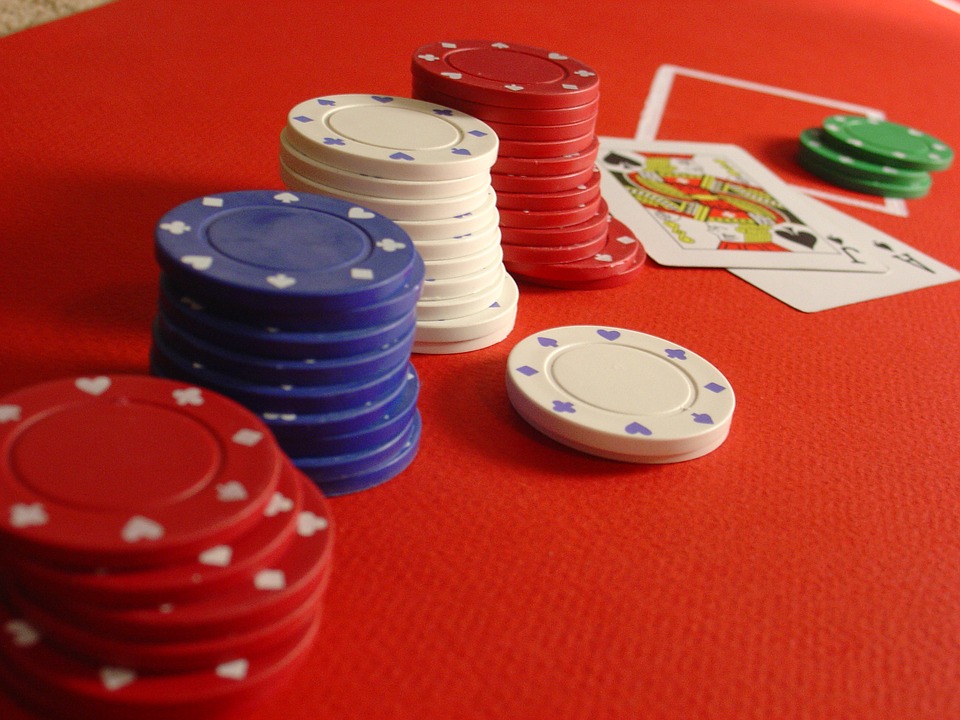
Blackjack Strategy
Blackjack Strategy is a mathematical probability guide to your decisions at the blackjack table. If you follow basic strategy you will reduce the house edge to less than 1%. Perfect play can reduce this to 0.5%.
Blackjack strategy takes into consideration the two cards you have been dealt along with the card the dealer has showing. Whether you take card, stand, split or double depends entirely in these two things.
Rules and limitations
Some casinos limit the actions you can take with different totals. These limitations can affect the blackjack strategy you should adopt. For example, sometimes you are only offered the chance to double down if your hand shows a total of 9, 10 or 11.
This is all fine for hard totals (totals without an Ace) but for soft totals (totals with an Ace) you will miss out on the chance to double down on the lower totals. Optimum blackjack strategy guides will recommend that you double on hands A-2 through to A – 6 when the dealer has a 5 or a 6 showing.
As a further limitation related to doubling down, some casinos will not allow you to double after a split. A split hand results in you turning one hand into two. If you cannot double these totals when strategy dictates then this severely limits your options.
Another issue that affects strategy is the surrender option. Surrender is sometimes not allowed, which means you then always have to play a weak hand. Blackjack strategy advises you to surrender if your first two cards total 16 and the dealer is showing a 9, 10 or Ace. If surrender is not allowed, you will have to risk your money playing out the poor hand.
Blackjack insurance bet
Casinos can also have different approaches to insurance. The traditional insurance bet allows you to insure yourself against the dealer getting a blackjack. In order to do this, you bet half your original bet again.
If the dealer gets blackjack, you then receive 2-1 on this insurance bet. If the dealer does not get a blackjack you lose your insurance wager.
Some casinos will treat this as offering ‘even money’ immediately if the dealer shows an Ace. Insurance and ‘even money’ offers are exactly the same in their results for the player.
Blackjack insurance bets can feel attractive to the player because it seems like you are simply insuring yourself against a blackjack for the dealer and so improving your chances of winning, or at least reducing the amount you could lose.
However, insurance bets are actually bad strategy. Insurance is in effect a bet that the dealer will get a natural blackjack. The dealer is of course more likely not to get a natural blackjack, so as all strategy guides will tell you, this makes insurance a bad bet.
It is always advisable to check out the exact blackjack rules at your chosen casino before playing so that you can prepare your perfect blackjack strategy.
Blackjack strategy table
Browse the table below to study basic blackjack strategy:
| Player hand | Dealer’s face-up card | |||||||||
|---|---|---|---|---|---|---|---|---|---|---|
| 2 | 3 | 4 | 5 | 6 | 7 | 8 | 9 | 10 | A | |
| Hard totals (excluding pairs) | ||||||||||
| 17-20 | S | S | S | S | S | S | S | S | S | S |
| 16 | S | S | S | S | S | H | H | SU | SU | SU |
| 15 | S | S | S | S | S | H | H | H | SU | H |
| 13-14 | S | S | S | S | S | H | H | H | H | H |
| 12 | H | H | S | S | S | H | H | H | H | H |
| 11 | Dh | Dh | Dh | Dh | Dh | Dh | Dh | Dh | Dh | H |
| 10 | Dh | Dh | Dh | Dh | Dh | Dh | Dh | Dh | H | H |
| 9 | H | Dh | Dh | Dh | Dh | H | H | H | H | H |
| 5-8 | H | H | H | H | H | H | H | H | H | H |
| Soft totals | ||||||||||
| 2 | 3 | 4 | 5 | 6 | 7 | 8 | 9 | 10 | A | |
| A,8 A,9 | S | S | S | S | S | S | S | S | S | S |
| A,7 | S | Ds | Ds | Ds | Ds | S | S | H | H | H |
| A,6 | H | Dh | Dh | Dh | Dh | H | H | H | H | H |
| A,4 A,5 | H | H | Dh | Dh | Dh | H | H | H | H | H |
| A,2 A,3 | H | H | H | Dh | Dh | H | H | H | H | H |
| Pairs | ||||||||||
| 2 | 3 | 4 | 5 | 6 | 7 | 8 | 9 | 10 | A | |
| A,A | SP | SP | SP | SP | SP | SP | SP | SP | SP | SP |
| 10,10 | S | S | S | S | S | S | S | S | S | S |
| 9,9 | SP | SP | SP | SP | SP | S | SP | SP | S | S |
| 8,8 | SP | SP | SP | SP | SP | SP | SP | SP | SP | SP |
| 7,7 | SP | SP | SP | SP | SP | SP | H | H | H | H |
| 6,6 | SP | SP | SP | SP | SP | H | H | H | H | H |
| 5,5 | Dh | Dh | Dh | Dh | Dh | Dh | Dh | Dh | H | H |
| 4,4 | H | H | H | SP | SP | H | H | H | H | H |
| 2,2 3,3 | SP | SP | SP | SP | SP | SP | H | H | H | H |
- S = Stand
- H = Hit
- Dh = Double (if not allowed, then hit)
- Ds = Double (if not allowed, then stand)
- SP = Split
- SU = Surrender (if not allowed, then hit except stand on 16v10 if not first two cards.)
Learn the above table and know exactly when to hit, stand, split, double or surrender and reduce the house edge on blackjack to 0.5%.
